
Start with the wall type
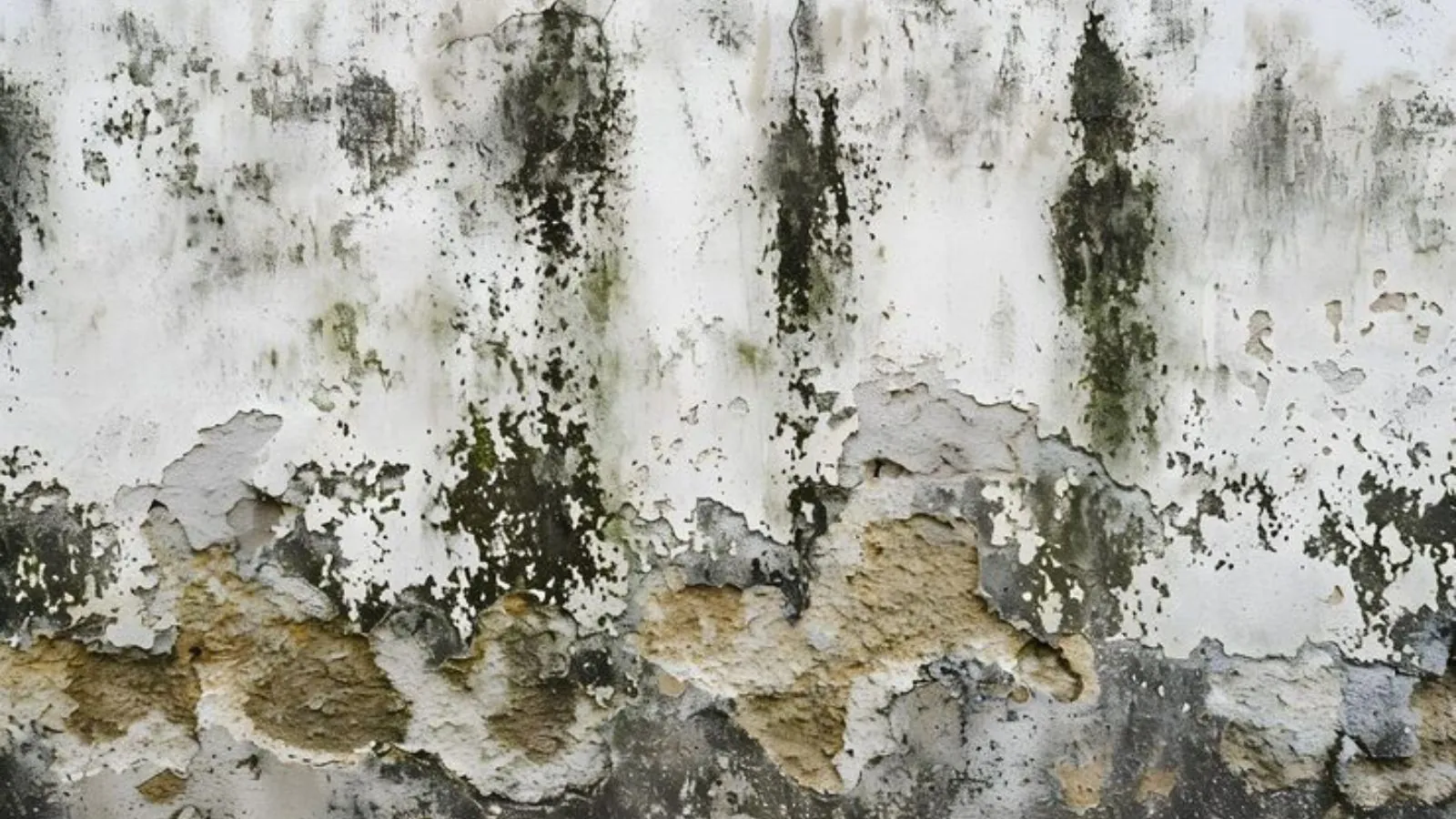
Basement walls come in two broad kinds. Hard, mineral surfaces such as poured concrete and concrete block can be cleaned. Porous finishes such as drywall, wood paneling and insulation generally cannot, because growth extends into the material.
| Wall material | Can it be cleaned? | Usual approach |
|---|---|---|
| Bare poured concrete | Yes | Scrub, rinse, dry and control humidity |
| Concrete block | Yes, with more effort | Scrub into the pores, dry thoroughly |
| Painted masonry | Often | Clean, and remove flaking paint that traps moisture |
| Drywall | Usually not | Cut out the affected section and replace after drying |
| Wood paneling or studs | Solid wood often yes, paneling often no | Clean or sand solid wood, discard thin paneling |
| Fiberglass insulation | No | Remove and replace |
We do not give health advice or diagnose anything. If you have health concerns about mold in your home, talk to a physician.
Is it mold or mineral salts?
Not every mark on a basement wall is mold. White, powdery or crystalline deposits on concrete are often efflorescence, which is mineral salt left behind as water evaporates through the wall. It brushes off as a dry powder and dissolves in water.
Mold is more often fuzzy, slimy or spotty, and gray, green, black or brown. It usually sits on a film of dust, paint or paper, since bare concrete offers little to feed on. Both are signs of moisture, so the cause needs attention either way.
Cleaning mold from concrete or block
This is the one job on this page that many homeowners can do themselves, provided the area is small. Guidance published by the U.S. Environmental Protection Agency suggests that areas under about ten square feet are usually manageable by a homeowner. Larger areas, or any area with hidden growth, are better handled by a professional.
- Fix or at least identify the moisture source first.
- Wear gloves, eye protection and a well-fitting respirator rated N95 or higher.
- Open a window or run an exhaust fan to the outside if the weather allows.
- Scrub the wall with water and detergent using a stiff brush.
- Rinse with clean water and wipe down.
- Dry the wall completely with a dehumidifier and airflow.
- Bag and discard rags and brushes when finished.
Never mix cleaning products. In particular, never mix bleach with ammonia or with other cleaners. Detergent and water do the real work on a hard surface, and drying afterward is what keeps the wall clean.
Mold on finished basement walls
Drywall is a different problem. Mold on the room side usually means more on the back, where the paper faces the damp foundation. Wiping the surface removes the color and leaves the growth inside.
The proper fix is removal. The affected drywall is cut out beyond the visible edge, the insulation behind it comes out, and the framing and the foundation wall are cleaned and dried. On larger areas this is done inside a plastic containment with HEPA air filtration so dust and spores do not travel through the house.
That process is what the trade calls remediation, and it follows the ANSI/IICRC S520 standard. Our mold remediation page explains the steps.
Find the moisture, or it returns
Mold on a basement wall always has a water story. The usual ones are seepage through the foundation after rain, condensation on a cool wall in humid weather, a plumbing leak inside the wall, or a past flood that was never fully dried.
- Staining that follows a crack or the floor joint suggests seepage.
- Growth spread evenly across a cool wall suggests condensation.
- A patch below a bathroom or kitchen suggests a plumbing leak.
- Growth along the bottom foot of a finished wall suggests a past water event.
Seepage and drainage are the business of a waterproofing or drainage contractor. Leaks belong to a plumber. Drying the structure after a water event is restoration work, described on our basement water damage cleanup page.
What is different for Cary and Illinois homeowners
Illinois now regulates mold remediation contractors. Under a state rule that took effect in September 2026, anyone doing mold remediation for hire in Illinois has to be registered with the Department of Public Health, unless an exemption applies. Registration is not granted without insurance paperwork and a certification from an outside body. The agency publishes a lookup of who is registered. Before you pay someone to take mold off finished walls, get their registration details and confirm them there.
On the moisture side, Cary's public drainage has published limits: pipes sized for the storm expected once in ten years, ponds sized for the once-in-a-century rain. Anything heavier than the pipes can carry sits in yards for a time, and that is when foundations get tested. Keeping gutters and downspout extensions working is the low-cost defense. Where this comes from: the registration page on the state health department's website, and the flooding page on Cary's municipal site.
Keeping it from coming back
After cleaning or remediation, control humidity. A basement dehumidifier set to hold relative humidity around 50 percent or below is the standard advice in federal guidance. Empty it or plumb it to a drain so it never shuts off full.
Keep stored items off the floor and away from the walls so air can move. Avoid carpet directly on a slab if the basement has any history of dampness. And look at the walls again after the next heavy rain.
If your home is across the river, our Fox River Grove page discusses hillside and river-side moisture there. In Cary, our Cambria page covers English and walkout lower levels.
Common Questions
Can I paint over mold on a basement wall?
No. Paint does not stop growth and tends to peel as the moisture continues. Clean and dry the wall and resolve the moisture first.
Does bleach remove mold from concrete?
Detergent, water and scrubbing remove it from hard surfaces. Federal guidance does not recommend routine use of bleach for mold cleanup. If you do use it, never mix it with other cleaners and ventilate well.
When should I call a professional?
When the affected area is larger than about ten square feet, when it involves drywall or insulation, when you suspect growth inside the wall, or when it keeps returning.
How do I check whether a mold contractor is registered in Illinois?
The Illinois Department of Public Health maintains a public search tool of registered mold remediators. Ask the company for its registration and confirm it there before hiring.