
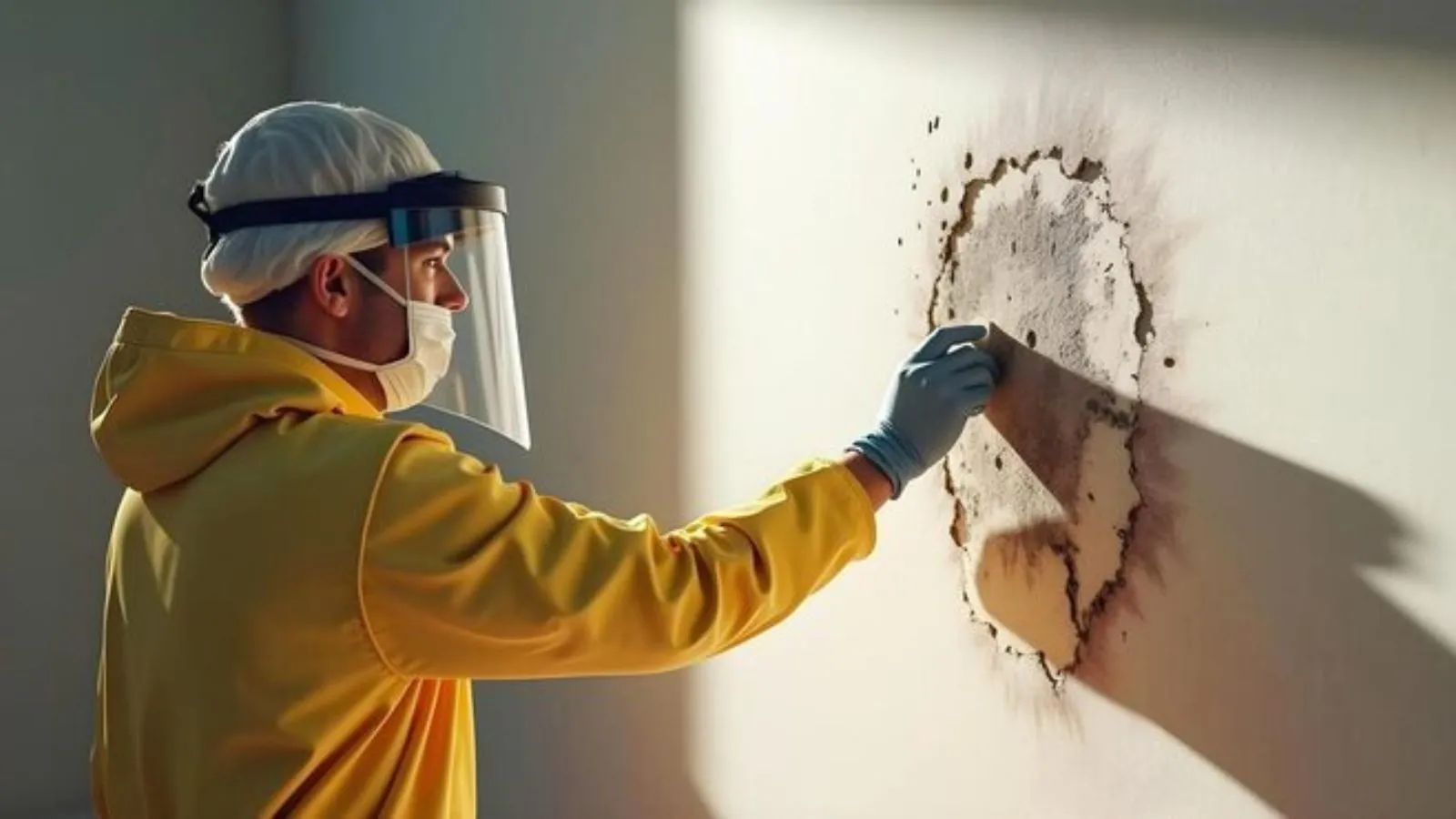
Dark spots on a wall or a musty smell that will not go away?
Those are the two ways most people discover mold. The trade name for dealing with it properly is mold remediation: containing the area, removing materials the mold has grown into, cleaning what remains and correcting the moisture that allowed it. Mold remediation in Cary, IL follows the published ANSI/IICRC S520 standard.
Mold needs moisture. In most of the calls we see, there was a leak first: a toilet upstairs, a bathroom sink, an AC condensate line, a roof or siding leak. That leak has to be fixed, or the mold returns.
Where mold turns up after water damage
- Bathrooms. At the corner of the wall and ceiling near the shower, and under the sink.
- Closets. On walls and carpet where a leak from a neighboring bathroom or air handler went unseen.
- Behind furniture on outside walls, found when a dresser or bed is moved.
- Under carpet. Discovered when a corner is lifted after an old leak.
- Finished basement ceilings and walls below a plumbing leak.
- Inside walls, found during remodeling when the drywall comes off.
Some of these are small surface spots on a hard surface. Others are the visible edge of growth inside a wall. Size alone does not tell you which, and that is what an inspection is for.
Why Cary homes get mold
Humidity and water events both play a part. Summers are wet here, with June the wettest month at Rockford in the National Weather Service normals at 5.23 inches, and basements stay cool. Cool surfaces in humid air collect condensation.
Then there are the events. A sump failure during a storm, a slow drip under a sink, a wet crawl space. Any of these leaves materials damp long enough for growth to start if they are not dried. That is why drying a water loss promptly is the most effective mold prevention there is.
Inspection, testing and clearance
An inspection starts with your eyes and a moisture meter. The inspector looks at the visible growth, measures the surrounding materials for moisture, and traces the water source. A thermal imaging camera helps find damp areas that look normal.
Testing is a separate question. Air or surface sampling can identify what is present and, more usefully, can confirm afterward that an area has been cleaned. It is not always needed when growth is plainly visible and the cause is known.
Clearance testing after the work is often done by an independent assessor who did not perform the remediation. That separation is good practice, and it is what many buyers, lenders and condo associations ask for. In Illinois, professionals who only provide mold assessment are not required to register as remediators.
How remediation is done
The work area is sealed off with plastic sheeting, and a HEPA-filtered air scrubber runs to keep the space under negative pressure. This keeps spores from spreading to clean rooms while materials are disturbed.
Porous materials with growth, such as drywall, insulation, carpet pad and ceiling tile, are cut out, bagged and removed. Framing and other solid materials are cleaned by HEPA vacuuming and damp wiping or abrasive methods, depending on the surface.
The area is then dried to normal readings with dehumidifiers and air movers, as outlined on the structural drying and dehumidification page. Only after that are walls and finishes rebuilt.
| Situation | Typical approach | Notes |
|---|---|---|
| Small spots on tile, glass or metal | Cleaning by the homeowner is often reasonable | Fix the ventilation or leak |
| Growth on drywall or ceiling | Remove the affected section under containment | Check behind and around it |
| Under carpet or in a closet | Remove pad and affected carpet, treat subfloor | Find the leak that caused it |
| Inside walls or widespread | Full containment and remediation | Independent clearance is sensible |
Want someone to look and tell you what is salvageable? That is exactly what an inspection visit is for, so call and book one.
☎ Call (833) 521-1033Illinois registration: what to ask any company
Illinois now regulates this trade. The Illinois Department of Public Health states that mold remediators must register with the department unless they qualify for an exemption, and that registration requires proof of insurance and an approved third-party certification. The department keeps a public search tool of registered remediators.
Ask any company you consider for its registration and look it up on the department's list. The department also encourages people to do their own background research before hiring. That advice applies to whoever does your work.
Mold found during a home sale
Real estate deadlines produce some of the most urgent mold calls. A buyer's inspector flags it, or a lender will not release funds until it is addressed. The practical steps are the same: fix the moisture, remediate, and obtain independent clearance documentation.
We cannot promise what a lender, buyer or inspector will accept, and nobody honestly can. Ask them what documentation they require before the work begins so the report matches what they need.
What we will not tell you
We do not diagnose health conditions or make health claims about mold. Questions about symptoms belong with a physician. We also will not promise that mold can never come back. It stays away when the moisture stays away.
The water side of the problem has its own pages. For a damp lower level see basement water damage cleanup, and for a condensate leak see AC leak water damage. A wet space under the floor is covered under crawl space water damage.
What affects the cost
- Size of the affected area and how many rooms.
- Location. Open wall, inside a cavity, attic or crawl space.
- Materials to be removed and rebuilt.
- Containment complexity.
- Testing and clearance if you or a third party require it.
Insurance coverage for mold is often limited or excluded, and may depend on whether a covered water loss caused it. Check your policy or ask your insurer. For your real number, call (833) 521-1033.
Mold remediation in Cary, IL 60013
We serve homes across Cary, including Cambria, Cimarron, Fox Trails, Greenfields and Foxford Hills, and nearby Fox River Grove. Scope and price are explained before work starts.
Mold Remediation: Questions From Cary Homeowners
Is mold an emergency?
Rarely in the way a burst pipe is. It is worth acting on promptly, especially if the leak behind it is still active. The phone line is open 24/7 to arrange an inspection.
Why does my closet smell musty and have spots on the wall?
There is probably a moisture source nearby: a bathroom on the other side of the wall, an air handler, or an outside wall with condensation. Finding that source is the first step.
How much notice do you need for an inspection?
Call and ask for current availability. We do not publish a response time. You will get a straight answer about when someone can come out.
My buyer's lender wants the mold removed before closing. What do I need?
Ask the lender exactly what they require. Usually it is remediation by a qualified company and a clearance report from an independent assessor. We can do the remediation and provide documentation, but we cannot promise the lender's decision.
Do I need testing before remediation?
Not always. Visible growth with a known cause can often be remediated without pre-testing. Testing is most useful when the source is unclear or when someone needs written confirmation afterward.
Should I just spray it with bleach?
On a hard, non-porous surface, household cleaning can handle small spots. On drywall or carpet, spraying does not remove growth inside the material, and the moisture problem remains.