
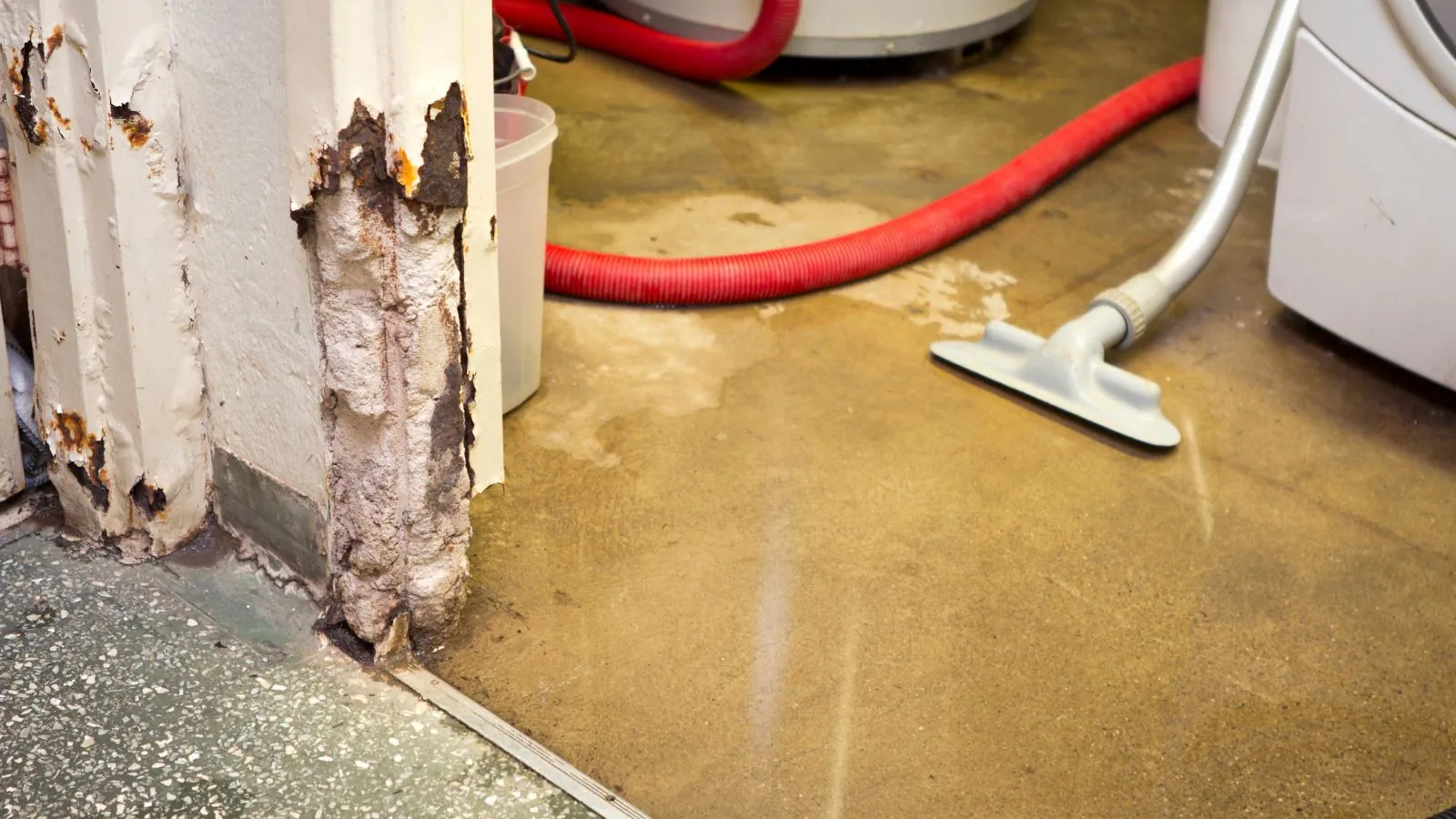
Basement water damage cleanup in Cary, IL covers water in the below-grade level of a home: a sump pump that failed, seepage through the walls or floor after rain, or a leak from equipment down there. If your basement is taking water now, call. The line is open 24/7.
Do not step into basement water if outlets, cords or the electrical panel may be wet. If the panel is upstairs and dry, switch off the basement circuits. Keep children and pets upstairs, and move what you can reach from the stairs.
Basement flooding: what to do first
- Look before you step. If water is near power, stay on the stairs and call the utility or 911.
- Check the sump pump. A tripped breaker or an unplugged cord is a quick fix if you can reach it safely.
- Note the smell and color. Dark water with a sewage odor is a different job. Stay out.
- Lift what matters. Photos, documents and electronics go upstairs first.
- Photograph the water line on the walls for your insurer.
Why basements in Cary take water
Rain is the main driver. National Weather Service observers in Cary logged 3.72 inches across July 11 and 12, 2017, and 3.29 inches in 24 hours ten days later. Soil that is already saturated sends the next storm straight to the foundation drains and the sump pit.
Cary states the design limits of its drainage openly: street pipes for the ten-year storm, detention ponds for the hundred-year rain. When a storm exceeds that, streets and yards hold water for a while. A pump that loses power at that moment is the classic Cary basement flood.
Basements are widespread in the village's subdivisions, and not all are fully below ground. Where a lower level has a door or full-size windows at grade, as English and walkout plans do, a flooded yard has a direct route indoors.
How a wet basement is cleaned up
Standing water is pumped and extracted first. That step is described on the water extraction page. In a finished basement the carpet is extracted and the pad evaluated.
Then the crew maps moisture. Meters read the bottom of every wall, and a thermal imaging camera shows how high water has wicked. Baseboards are removed, and wet drywall is either vented and dried or cut away above the wet line.
Contents are moved to a dry area and sorted. Cardboard boxes that got wet are a common source of later odor, so they are emptied. Air movers and LGR dehumidifiers then run until the walls, the framing and the slab reach normal readings.
| Basement type | Typical damage | Usual scope |
|---|---|---|
| Unfinished, bare concrete | Wet stored items, damp block or poured walls | Pump out, clean, dehumidify |
| Finished with carpet | Soaked carpet and pad, wet drywall base | Extraction, pad out, walls dried or cut |
| Finished with vinyl plank | Water trapped under flooring | Flooring lifted, slab dried |
| Mechanical area | Furnace or water heater reached by water | Cleanup, plus inspection by that trade |
Basement flooded and already smells musty? Call and we will explain what the first visit includes.
☎ Call (833) 521-1033Which problem is it
Clear water after rain or a pump failure belongs on this page. Water with a sewage smell that came up through a floor drain is sewage backup cleanup, and nobody should walk through it.
River or creek water entering from outside is contaminated as well and follows the flood damage cleanup process. If the source was a failed tank, see water heater leak cleanup.
A basement that has been damp for a long time may have visible growth on drywall or stored items. That is handled under the S520 standard, described on the mold remediation page.
Restoration is not waterproofing
We remove water, dry the structure and repair what was damaged. We do not waterproof foundations, repair cracks, install drain tile or replace sump pumps. Those belong to a waterproofing contractor or a plumber.
If the inspection suggests water is coming through cracks or that the pump is undersized, the crew will tell you so. Fixing the cause is the only way to stop the next flood, and it is honest to say that is not our trade.
Cost factors and insurance
- Depth and area of the water.
- Finished or unfinished.
- Water source. Clean, seepage or sewage.
- Contents to move, clean or discard.
- Drying days for walls and slab.
This is where policies differ most. The Illinois Department of Insurance says water seepage is not covered and that protection against sewer backup or an overflowing sump is an extra you pay for separately. Flood is separate again. Check your policy or ask your insurer which of these you have.
Serving Cary and nearby towns
We clean up basements across Cary, IL 60013, including Cambria, Cimarron and Greenfields, and in Fox River Grove, 60021.
Basement Water Damage: Questions From Cary Homeowners
Do you handle basement water damage emergencies at night or on weekends in Cary?
Yes. Basements flood during overnight storms, so the line is answered 24/7 and a crew is dispatched to Cary after the call. Stay out of the water if power may be involved.
Water comes into my basement after heavy rain. Can you stop it?
We can remove the water and dry the basement. Stopping it from entering is waterproofing or drainage work, which we do not perform. We will tell you what we see so you can bring in that trade.
My sump pump failed. Is that covered by insurance?
Only if your policy includes sump pump overflow or water backup coverage, which is typically an add-on. Ask your insurer. We document the loss either way.
The basement flooded last week and now smells. Is it too late?
No, but do not wait longer. Wet drywall, carpet pad and boxes need to come out, and the structure needs drying. The crew will also check for visible mold.