
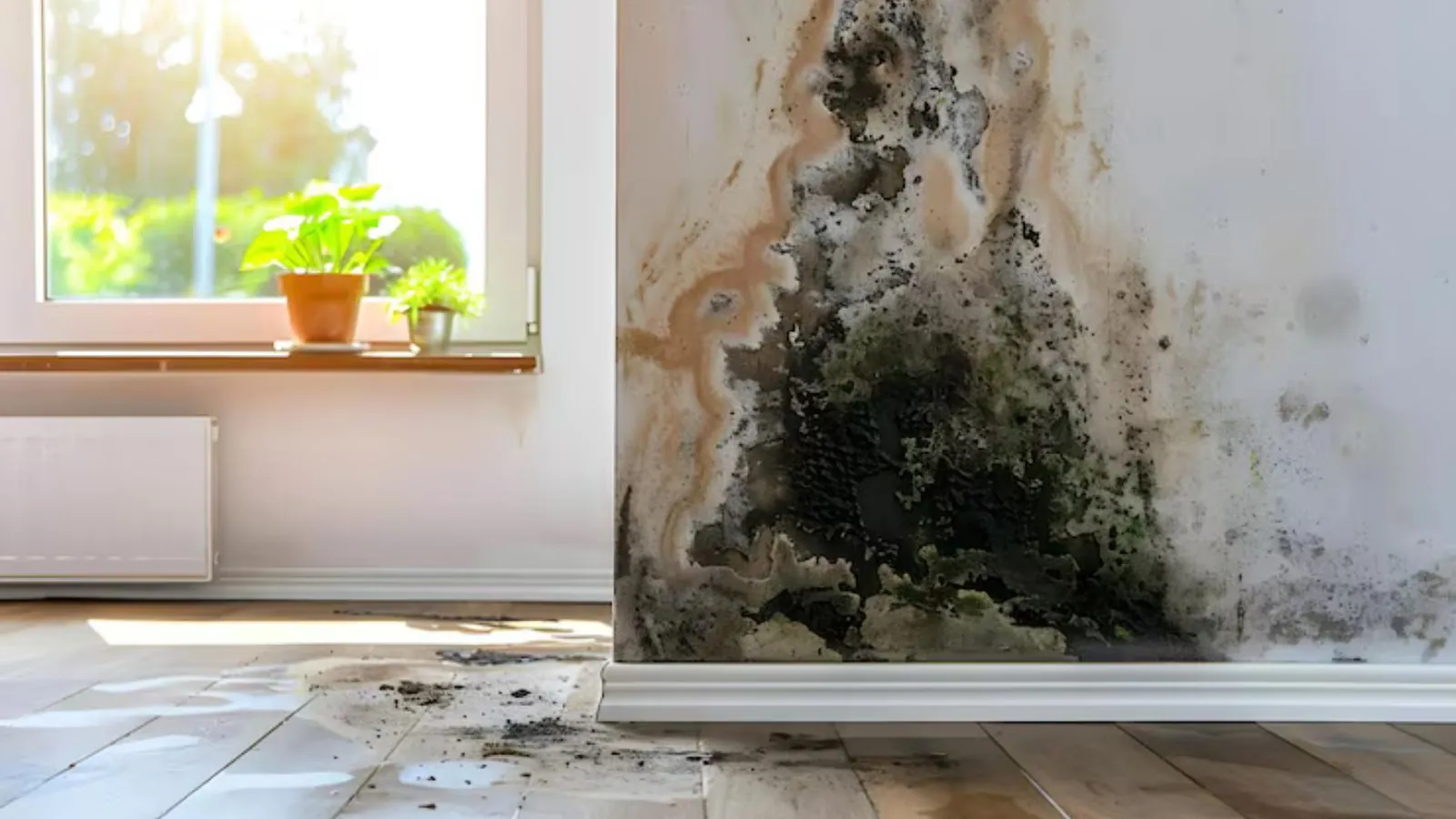
Decide first whether this is a homeowner job
Some basement mold is a reasonable weekend project. Some is not. The U.S. Environmental Protection Agency's homeowner guidance uses about ten square feet, roughly a three foot by three foot patch, as the size below which most people can handle cleanup themselves.
| Situation | Reasonable to clean yourself? | Why |
|---|---|---|
| A few spots on stored plastic bins and shelving | Yes | Hard surfaces wipe clean |
| Light growth on bare concrete, under ten square feet | Yes | Mineral surface, small area |
| Musty cardboard boxes and papers | Discard, do not clean | Paper cannot be cleaned reliably |
| Growth on carpet or pad | Usually no | Porous, and the slab below is likely damp |
| Growth on drywall or insulation | No | Material has to be removed |
| Widespread growth on joists overhead | No | Large area, overhead work, containment needed |
| Any area after sewage or flood water | No | Contaminated water changes the job |
We do not offer health advice. If anyone in the home has health concerns related to mold, ask a physician before doing this work yourself.
Gear and setup
For a small cleanup you need gloves, eye protection without vents and a respirator rated N95 or better that fits your face. Wear clothes you can wash right away. Keep children and pets out of the basement until you are finished and the area is dry.
Close the door at the top of the stairs. If your furnace or air handler is in the basement, turn the system off while you work so it does not pull dust through the house. Ventilate to the outdoors through a window if the weather is dry.
Step 1: Sort the contents
Start with the stuff, since it is in the way of everything else. Carry items outside or to the garage to sort them if you can. Work in three groups.
- Hard, non-porous items such as plastic, glass, metal and sealed wood. Wipe with detergent and water, dry fully, keep.
- Washable fabrics. Launder and dry completely.
- Porous items with visible growth such as cardboard, paper, upholstered furniture, mattresses and unsealed particleboard. Discard.
Bag discarded items in the basement before carrying them through the house. Replace cardboard boxes with lidded plastic bins and put them on shelving, off the floor and away from the walls.
Step 2: Floors
Bare concrete can be scrubbed with detergent and water, rinsed and dried. Sealed or painted floors are handled the same way.
Carpet is the hard case. Carpet laid directly on a basement slab tends to hold moisture underneath, and growth on the surface usually means the pad and backing are affected. Small area rugs can be discarded. Wall-to-wall carpet with visible growth should come out, and the slab beneath should be checked for moisture before anything new goes down. Our page on carpet water damage restoration explains how that decision is made after a water event.
Step 3: Framing and joists overhead
Look up. The floor joists and the underside of the subfloor above an unfinished basement often carry a light dusting of growth when humidity has been high. Solid lumber can be cleaned, but overhead work puts debris on your face and spreads dust widely.
A small area near a known leak can be damp-wiped. Growth across many joists is beyond a homeowner job. Professionals do it inside containment with HEPA vacuums and air scrubbers, following the ANSI/IICRC S520 standard. See our mold remediation page for what that involves.
Step 4: Dry the room and keep it dry
Cleaning without drying is temporary. Run a dehumidifier sized for the space and set it to hold relative humidity at or below 50 percent. Federal guidance gives 30 to 50 percent as the ideal indoor range. Buy an inexpensive humidity gauge and leave it in the basement so you can see the number.
Then address the source. Gutters and downspouts that discharge near the foundation, a dryer that vents indoors, a slow plumbing leak or a past flood that never fully dried are the common ones.
Basement conditions and rules in Cary
Cary summers load basements with moisture. National Weather Service climate normals for 1991 to 2020 list June as the wettest month at Rockford, with 5.23 inches, and Chicago's wettest month, May, at 4.49 inches. Warm, damp air meeting cool basement walls is where condensation starts, which is why a dehumidifier earns its place here from late spring through early fall.
If the job is too large to do yourself, Illinois has rules for who you hire. State health officials now keep a register of mold remediation contractors, and being on it requires a recognized outside certification. Assessment-only firms, the ones who inspect and test but do not remove anything, are outside that requirement.
Use the state's online lookup, and take the agency's own advice to check a contractor's background yourself as well. Sources: federal climate normals for the two stations and the state's mold registration page.
Mistakes to avoid
- Dry brushing or sweeping, which puts dust and spores into the air.
- Mixing bleach with ammonia or any other cleaner.
- Running fans across moldy surfaces before they are cleaned.
- Painting or sealing over growth.
- Putting belongings back before the humidity is under control.
- Ignoring the smell after cleaning. A persistent odor means something is still damp.
When the mold follows a water event
If the basement flooded or a pipe leaked, the cleanup order changes. Water removal and structural drying come first, and mold cleanup follows if it is needed at all. Materials dried in the first two days often never develop growth.
That is restoration work, covered on our basement water damage cleanup page. For local context, our Fox River Grove page discusses river-side dampness, and our Greenfields page covers what turns up when older walls are opened.
Common Questions
What kills mold in a basement?
Removal and dryness, more than any product. Scrub hard surfaces with detergent and water, discard porous items with growth, and hold humidity at or below 50 percent.
Is it safe to clean basement mold myself?
For small areas on hard surfaces, with gloves, eye protection and an N95 respirator, many people do. For larger areas, porous materials or any health concern, use a professional and ask a physician about health questions.
Why does the musty smell come back after I clean?
Moisture is still present somewhere. Check under carpet, behind finished walls, inside stored boxes and at the base of the foundation walls.
What humidity should I aim for in a Cary basement in summer?
At or below 50 percent relative humidity. Summers here are humid, with late spring and June the wettest stretch in the weather record, so most basements need a dehumidifier running through that season.